Asphalt Resurfacing
Extend pavement life without full reconstruction
What Is Asphalt Resurfacing?
Asphalt resurfacing is the process of placing a new layer of asphalt over an existing pavement surface. It restores the riding quality, seals the surface from water infiltration, and extends the functional life of the pavement — typically by 10–15 years — without the cost and disruption of full-depth reconstruction.
Resurfacing is viable when the existing base and subgrade are still structurally sound but the surface has deteriorated from age, oxidation, or minor distress. The existing surface may be milled first (mill and overlay) or paved directly over (direct overlay), depending on elevation constraints and surface condition.
In commercial applications, resurfacing is the most common rehabilitation strategy because it delivers a like-new surface at 40–60% of the cost of full reconstruction, with significantly less disruption to business operations.
When Is Asphalt Resurfacing Needed?
- Surface is oxidized, rough, or raveling but the base is still intact
- Widespread surface cracking that hasn't penetrated to the base layer
- Drainage is functioning but surface water pools in low spots
- Pavement is 12–18 years old and approaching the end of its surface life
- Curb reveal is adequate to accommodate an additional lift of asphalt
- Property appearance needs improvement for tenant retention or lease negotiations
- Insurance or liability concerns from deteriorating surface conditions
How Does Asphalt Resurfacing Work?
Condition Assessment
We evaluate the existing pavement to determine if resurfacing is appropriate. This includes visual inspection, core samples if needed, and drainage analysis.
Repair Preparation
Localized failures, utility patches, and severely cracked areas are saw-cut and replaced with full-depth patches before the overlay.
Surface Preparation
The existing surface is cleaned, and a tack coat is applied to ensure bond between the old and new asphalt layers.
Milling (if applicable)
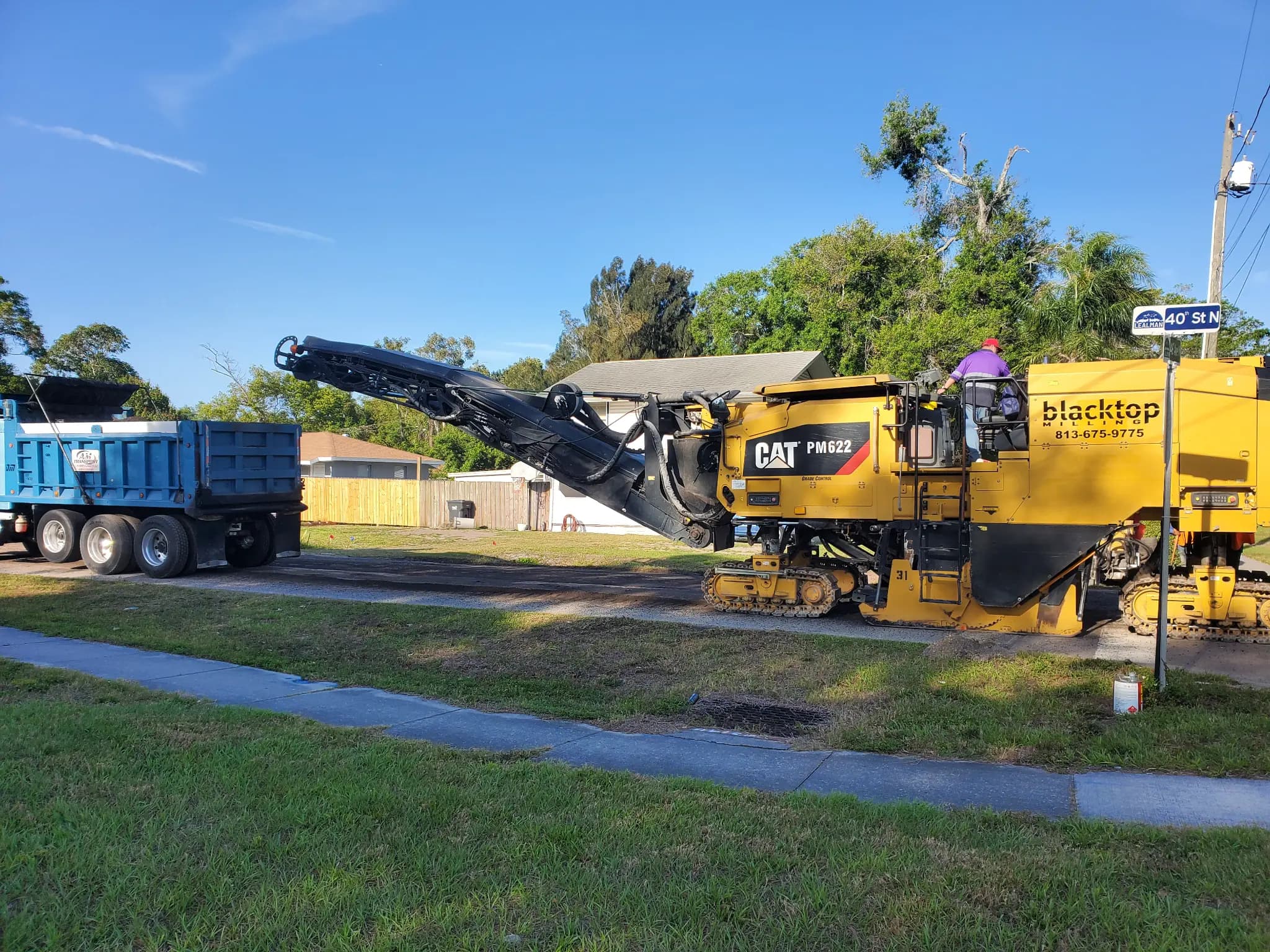
For mill-and-overlay projects, the existing surface is milled to a controlled depth to maintain curb reveal and drainage grades.
Asphalt Placement
New hot-mix asphalt is placed by paver at the specified thickness (typically 1.5–2 inches for surface course), then compacted.
Transitions & Details
Joints at curbs, buildings, and utilities are finished. Drainage inlets are adjusted if needed. The surface is inspected for proper slope.
Benefits of Asphalt Resurfacing
Limitations to Consider
Common Misconceptions
Myth: "Resurfacing fixes everything"
Reality: Resurfacing addresses surface-level deterioration. If the base has failed, the new surface will crack in the same locations within 1–2 years. A proper assessment determines whether resurfacing is appropriate.
Myth: "Thicker overlay means longer life"
Reality: Beyond a certain thickness, additional asphalt provides diminishing returns. The key factor is base condition, not overlay thickness. A 2-inch overlay on a sound base outperforms a 4-inch overlay on a failed base.
Myth: "You don't need to mill first"
Reality: Direct overlay is sometimes appropriate, but milling provides better bond, maintains curb reveal, and allows grade correction. The decision depends on elevation constraints and surface condition.
Myth: "Resurfacing is just cosmetic"
Reality: A properly executed overlay is a structural rehabilitation. It seals the surface from water, distributes loads, and provides a new wear surface that protects the underlying structure.
Typical Commercial Applications
What Information Is Needed Before Requesting an Estimate?
Frequently Asked Questions
How do I know if my lot needs resurfacing vs. reconstruction?
The key indicator is base condition. If cracking is surface-level and the pavement doesn't deflect under load, resurfacing is likely appropriate. If you see alligator cracking, significant settling, or base material pumping through cracks, reconstruction may be needed. We assess this during our site visit.
How long does resurfacing last?
A properly executed overlay on a sound base typically lasts 10–15 years before the next intervention is needed. Actual life depends on traffic volume, maintenance practices, and drainage conditions.
Can you resurface just part of my lot?
Yes. We commonly resurface high-traffic areas (drive aisles, entrances) while leaving lower-traffic areas (remote parking) for a later phase. This allows you to spread the investment over multiple budget cycles.
What happens to the striping?
Existing striping is removed during milling or covered by the overlay. New striping is applied after the asphalt has cured (typically 48–72 hours after placement). We can replicate the existing layout or implement a new design.
Ready to discuss your asphalt resurfacing project?
Get a detailed estimate for your commercial project. We respond within one business day.