Mill & Overlay
The most common commercial pavement rehabilitation method
What Is Mill & Overlay?
Mill and overlay is a pavement rehabilitation technique that combines two operations: first, the existing asphalt surface is milled (removed) to a controlled depth using a milling machine; then, a new layer of hot-mix asphalt is placed over the prepared surface. This produces a like-new driving surface while maintaining existing grades and curb heights.
The milling operation removes deteriorated material, creates a rough bonding surface for the new asphalt, and allows grade correction without raising the overall pavement elevation. The overlay then provides a fresh wear surface with full structural capacity.
Mill and overlay is the most frequently specified rehabilitation method for commercial parking lots because it addresses both structural and functional deterioration while maintaining elevation relationships with curbs, buildings, and drainage structures.
When Is Mill & Overlay Needed?
- Surface deterioration with intact base — cracking, raveling, oxidation
- Curb reveal is insufficient for a direct overlay (less than 2 inches of exposed curb)
- Grade correction is needed to improve drainage
- Transition heights at buildings, sidewalks, or utilities need to be maintained
- Existing surface has been previously overlaid and cannot accept additional height
- Localized failures need to be removed before new surface placement
- Pavement is 15–20 years old with widespread surface distress
How Does Mill & Overlay Work?
Pre-Milling Assessment
We identify milling depth, areas requiring full-depth repair, and utility structures that need protection or adjustment during milling.
Traffic Control & Phasing
Work zones are established and phasing is coordinated to maintain property access throughout the project.
Milling Operation
The milling machine removes asphalt to the specified depth (typically 1.5–2 inches). Millings are loaded into trucks for recycling. The milled surface is swept clean.
Base Repairs
Any areas where milling reveals base failure are saw-cut and repaired with full-depth patches before overlay.
Tack Coat Application
A bonding agent is applied to the milled surface to ensure adhesion between the old and new asphalt layers.
Asphalt Overlay
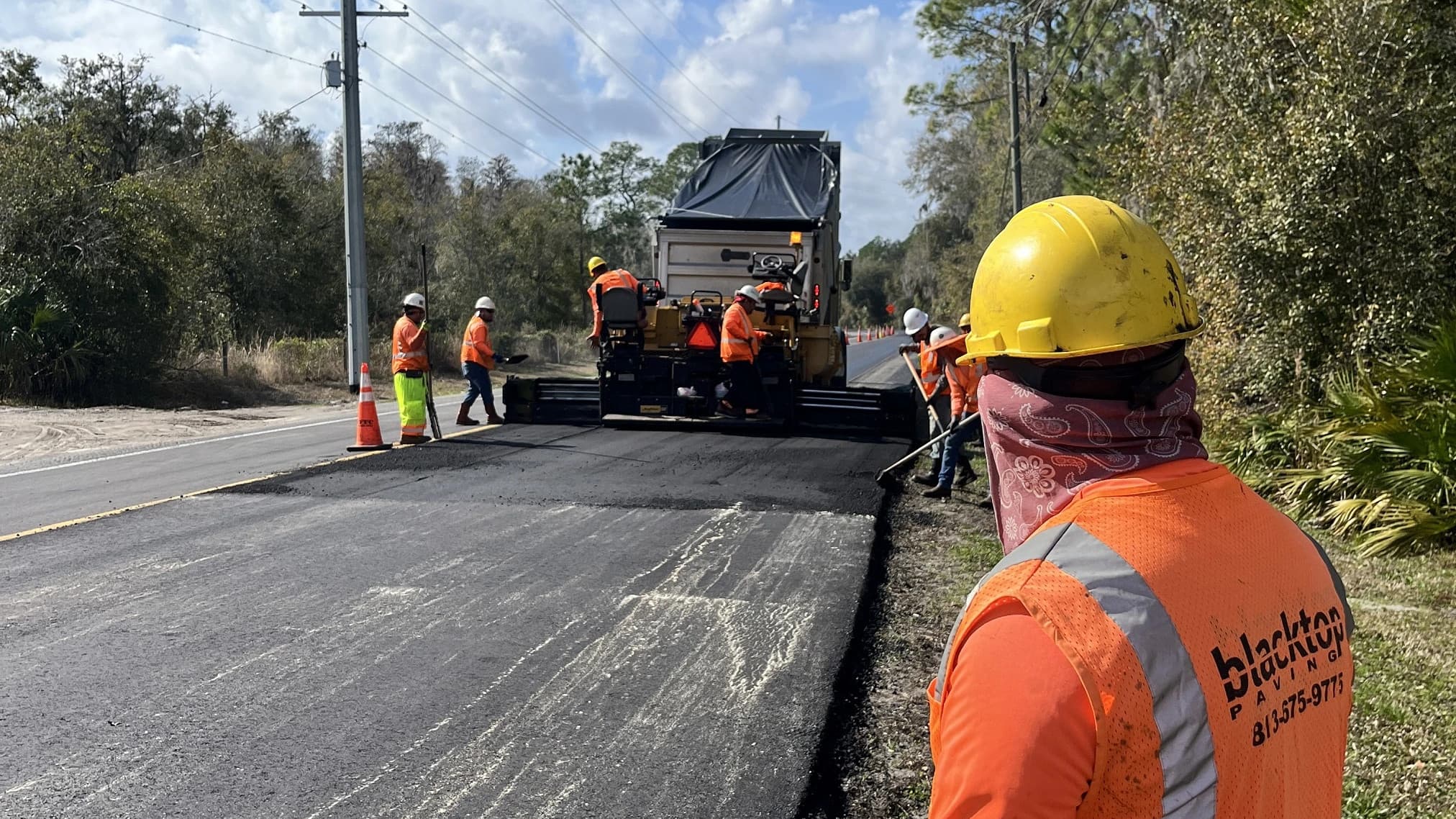
Fresh hot-mix asphalt is placed by paver at the specified thickness, then compacted with steel drum and pneumatic rollers to achieve target density.
Benefits of Mill & Overlay
Limitations to Consider
Common Misconceptions
Myth: "Mill and overlay is the same as resurfacing"
Reality: Mill and overlay is one type of resurfacing. Direct overlay (without milling) is another. The distinction matters because milling adds cost but provides better results in most commercial applications.
Myth: "You always mill the entire lot"
Reality: Milling can be targeted. We may mill drive aisles to full depth while only milling parking stalls to a shallower depth, or mill only the areas with elevation constraints.
Myth: "The milled surface can be left as-is"
Reality: A milled surface is rough, uneven, and not suitable for long-term traffic. It's an intermediate step — the overlay must follow within a reasonable timeframe (typically same day or next day).
Myth: "Mill and overlay fixes drainage problems"
Reality: It can improve drainage through grade correction, but it cannot solve fundamental drainage design issues. If the lot was graded incorrectly originally, mill and overlay alone may not resolve ponding.
Typical Commercial Applications
What Information Is Needed Before Requesting an Estimate?
Frequently Asked Questions
How deep do you mill?
Typical milling depth for commercial parking lots is 1.5–2 inches. We may mill deeper in areas with thicker existing pavement or where grade correction is needed. The depth is determined during the assessment phase.
What happens to the millings?
Milled asphalt is loaded into trucks and transported to a recycling facility where it's processed into reclaimed asphalt pavement (RAP) for use in new asphalt mixes. This is an environmentally responsible practice that also reduces disposal costs.
Can you mill and pave the same day?
Yes, for most commercial projects we coordinate milling and paving crews to work in sequence. This minimizes the time the milled surface is exposed and reduces overall project duration.
How long does mill and overlay last?
A properly executed mill and overlay on a sound base typically provides 12–18 years of service life. The actual lifespan depends on traffic volume, maintenance practices, and base condition.
Ready to discuss your mill & overlay project?
Get a detailed estimate for your commercial project. We respond within one business day.