Commercial Asphalt Paving
Full-scope asphalt paving for commercial properties across West Central Florida
What Is Commercial Asphalt Paving?
Commercial asphalt paving is the process of constructing or reconstructing asphalt pavement surfaces for commercial properties — parking lots, access roads, drive aisles, loading areas, and circulation paths. Unlike residential driveways, commercial paving must accommodate heavier loads, higher traffic volumes, and more demanding drainage requirements.
A commercial paving project typically involves site preparation, grading, aggregate base installation, asphalt placement in one or more lifts, compaction, and final surface finishing. The scope depends on whether the project is new construction on raw subgrade or rehabilitation of an existing surface.
Commercial asphalt is specified by mix design — the combination of aggregate gradation, binder grade, and air void content — selected to match the expected traffic loading and climate conditions. In West Central Florida, we work with FDOT-approved mix designs rated for our subtropical climate and the specific traffic demands of each property.
When Is Commercial Asphalt Paving Needed?
- New commercial development requiring parking lot construction from raw subgrade
- Existing pavement has reached end of service life (typically 20–25 years) and requires full-depth replacement
- Structural failure — base has deteriorated beyond what milling and overlay can address
- Property expansion requiring additional paved areas
- Conversion of unpaved areas to paved surfaces for parking or circulation
- Code compliance — ADA upgrades, fire lane modifications, or drainage corrections that require reconstruction
- Change of use — property transitioning to heavier traffic demands (e.g., retail to distribution)
How Does Commercial Asphalt Paving Work?
Site Assessment & Planning
We evaluate existing conditions, review drainage patterns, identify utility conflicts, and develop a phasing plan that minimizes disruption to your operations.
Site Preparation
Clearing, grubbing, and rough grading to establish proper subgrade elevations. Soft spots are identified and addressed before base installation.
Base Installation
Crushed aggregate base (typically 6–8 inches for commercial applications) is placed in lifts, moisture-conditioned, and compacted to specification.
Proof Rolling
A loaded truck passes over the prepared base to identify any remaining soft areas that need correction before paving.
Asphalt Placement
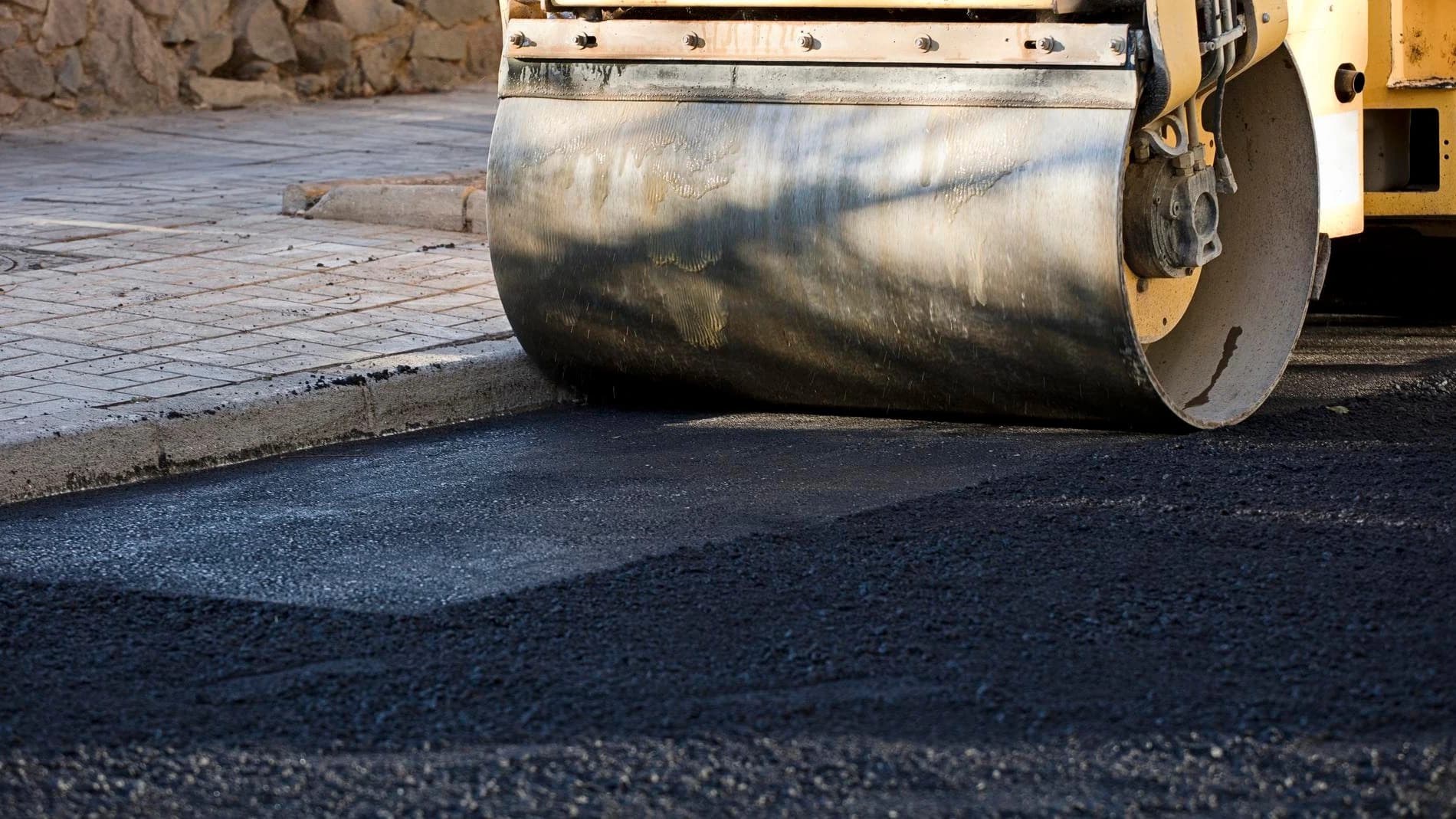
Hot-mix asphalt is placed by paver in one or more lifts depending on total thickness design. Each lift is compacted with steel drum and pneumatic rollers.
Compaction & Finishing
Final rolling achieves target density. Joints are sealed, transitions are smoothed, and the surface is inspected for proper cross-slope and drainage.
Benefits of Commercial Asphalt Paving
Limitations to Consider
Common Misconceptions
Myth: "All asphalt is the same"
Reality: Mix designs vary significantly by application. A parking lot surface course is different from a highway base course. The binder grade, aggregate size, and air void content are all specified for the intended use.
Myth: "Thicker is always better"
Reality: Proper structural design considers subgrade strength, traffic loading, and drainage. Over-building wastes money; under-building leads to premature failure. The right thickness is an engineering decision.
Myth: "You can pave over anything"
Reality: The existing base condition determines whether overlay is viable. If the base has failed, paving over it will result in the same failures appearing in the new surface within 1–2 years.
Myth: "Asphalt paving is a one-day job"
Reality: Commercial projects require planning, permitting, base preparation, and phased execution. A typical parking lot project takes 2–4 weeks depending on size and complexity.
Typical Commercial Applications
What Information Is Needed Before Requesting an Estimate?
Frequently Asked Questions
How long does a commercial paving project take?
Timeline depends on project size and complexity. A typical 30,000 sq ft parking lot takes 2–3 weeks from mobilization to completion. Larger projects or those requiring significant base work may take 4–6 weeks. We provide a detailed schedule during the proposal phase.
Can you pave while my business stays open?
Yes. We specialize in phased execution for occupied properties. We develop a phasing plan that maintains tenant access, delivery routes, and minimum parking requirements throughout construction.
What thickness of asphalt do I need?
Commercial parking lots typically require 2.5–4 inches of asphalt over 6–8 inches of aggregate base. The exact specification depends on expected traffic loading, subgrade conditions, and local requirements. We recommend a geotechnical evaluation for projects over 50,000 sq ft.
How long before we can drive on new asphalt?
Light traffic can typically resume 24–48 hours after placement. Heavy vehicles and full traffic loading should wait 3–5 days depending on ambient temperature. We provide specific guidance for each project.
Do you handle permitting?
We assist with the paving-related permitting process and can coordinate with your general contractor or property manager on overall project permits. Requirements vary by municipality.
Ready to discuss your commercial asphalt paving project?
Get a detailed estimate for your commercial project. We respond within one business day.