Municipal Milling
Large-scale milling for public infrastructure projects
What Is Municipal Milling?
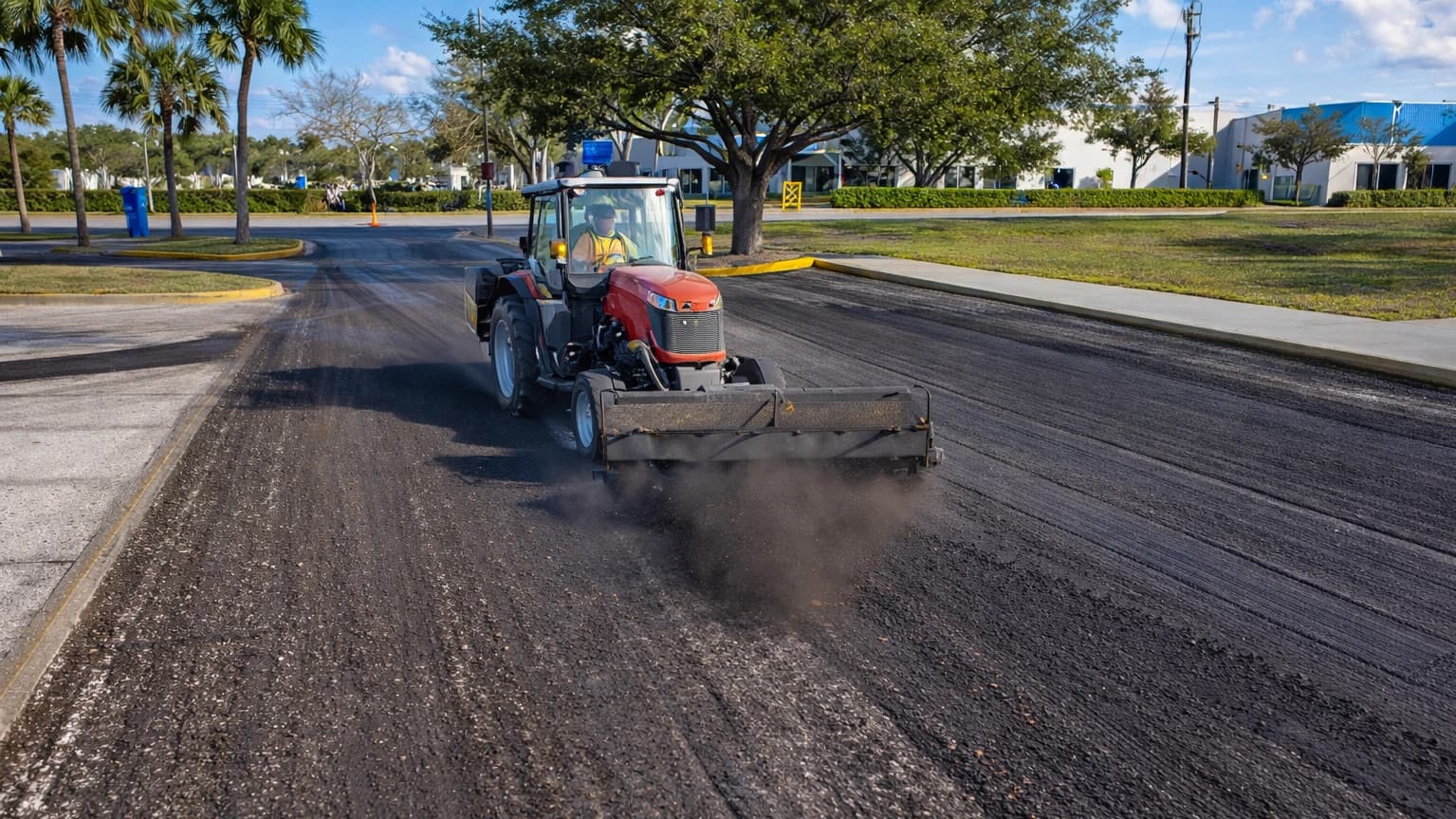
Municipal milling refers to asphalt milling operations performed on public roadways, highways, and government-owned infrastructure. These projects are typically larger in scale, subject to stricter specifications, and require coordination with traffic management, public utilities, and government inspection processes.
Municipal projects differ from private commercial work in several ways: they follow FDOT or county specifications rather than private owner preferences; they require certified documentation of materials, depths, and quantities; they involve traffic management plans approved by the governing authority; and they are subject to public inspection and acceptance processes.
Our municipal milling experience includes county roadway rehabilitation programs, FDOT maintenance contracts, federal facility maintenance, and municipal utility restoration projects. We maintain the certifications, insurance, and documentation capabilities required for public work.
When Is Municipal Milling Needed?
- Roadway rehabilitation programs — scheduled maintenance milling for overlay
- Utility restoration — milling over completed utility trenches for repaving
- Intersection reconstruction — removing pavement for signal or geometry changes
- Bridge approach corrections — milling to match new bridge deck elevations
- Drainage improvements — milling to correct roadway cross-slope
- ADA compliance — milling curb ramps and pedestrian areas to meet current standards
- Emergency repairs — rapid milling for pavement failures on public roadways
How Does Municipal Milling Work?
Pre-Construction Meeting
Project requirements, specifications, traffic control plans, and coordination procedures are reviewed with the owner's representative.
Traffic Control Setup
Approved traffic management plan is implemented. Lane closures, detours, and flagging operations are established per the MOT plan.
Utility Verification
All utilities within the work zone are verified and marked. Protection measures are established for structures that will remain.
Production Milling
Milling proceeds per specification — depth, width, pattern, and surface texture requirements are maintained throughout production.
Documentation
Quantities are tracked by station, depth measurements are recorded, and daily reports are submitted to the project inspector.
Cleanup & Restoration
Work zone is cleaned, temporary markings are placed, and traffic control is adjusted or removed per the approved plan.
Benefits of Professional Municipal Milling
Limitations to Consider
Common Misconceptions
Myth: "Municipal work is the same as commercial work, just bigger"
Reality: Municipal projects have fundamentally different requirements: formal specifications, inspection processes, documentation, traffic management plans, and acceptance criteria. The milling operation may be similar, but the project management is significantly more complex.
Myth: "Any milling contractor can do municipal work"
Reality: Municipal projects require specific insurance limits, bonding capacity, MOT certifications, and documentation capabilities. Not all commercial milling contractors have these qualifications.
Myth: "Government projects always go to the lowest bidder"
Reality: While price is a factor, most municipal procurement also evaluates qualifications, experience, equipment capability, and past performance. Responsible bidding considers the full picture.
Myth: "Municipal milling is more profitable"
Reality: Municipal projects have higher overhead costs (documentation, traffic control, compliance) and tighter specifications that reduce production rates. The margins are often comparable to or lower than private work.
Typical Municipal Applications
What Information Is Needed Before Requesting an Estimate?
Frequently Asked Questions
Are you qualified for FDOT work?
Yes. We have experience on FDOT maintenance and rehabilitation projects. Our equipment, personnel, and documentation processes meet FDOT requirements for milling operations.
Can you work at night?
Yes. We have lighting equipment and night-shift crews for projects that require off-peak or nighttime operations. Many municipal projects on high-traffic roadways require night work.
Do you handle traffic control?
We coordinate traffic control implementation per the approved MOT plan. Depending on the project, we may self-perform traffic control or work with a specialty traffic control subcontractor.
What documentation do you provide?
We provide daily production reports, depth verification records, quantity summaries, and any other documentation required by the project specifications. Our reporting meets FDOT and county standards.
Ready to discuss your municipal milling project?
Get a detailed estimate for your milling project. We respond within one business day.