
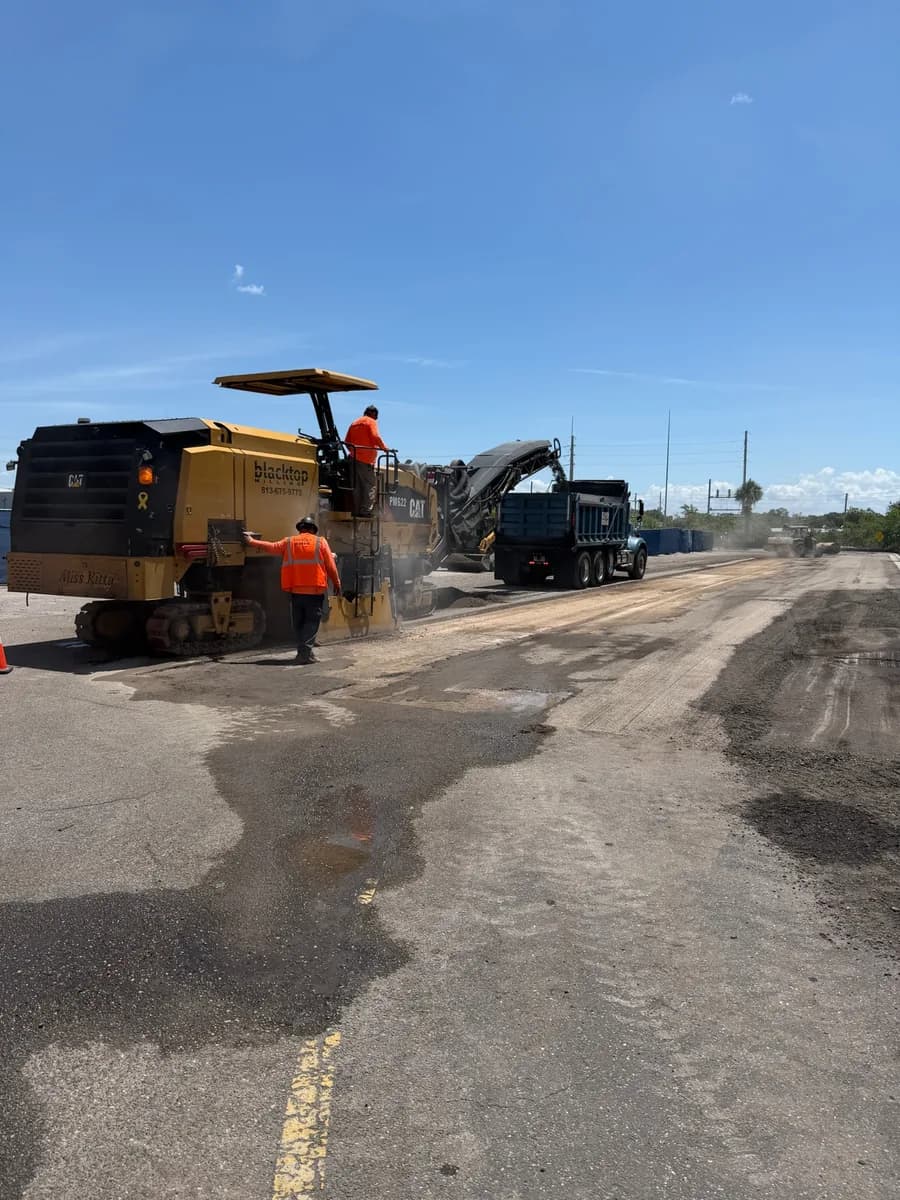
Full Depth Milling
Complete pavement removal for reconstruction projects
What Is Full Depth Milling?
Full depth milling is the complete removal of the asphalt pavement layer down to the aggregate base or subgrade. Unlike surface milling (which removes only the top 1–2 inches), full depth milling takes out the entire asphalt section — typically 3–8 inches depending on the original construction.
This operation is performed when the pavement has failed structurally and cannot be rehabilitated with surface treatments. The base layer is exposed for inspection, repair, or replacement before new pavement is constructed.
Full depth milling is more demanding than surface milling. It requires larger equipment, more cutting teeth, higher horsepower, and greater haul capacity. The operation also exposes the base layer to traffic and weather, so coordination with the paving contractor is critical to minimize exposure time.
When Is Full Depth Milling Needed?
- Structural pavement failure — alligator cracking, base pumping, severe rutting
- Complete reconstruction projects requiring removal to subgrade
- Pavement section is too thin for surface milling (less than 2 inches remaining)
- Base inspection required — need to evaluate base condition before deciding on rehabilitation
- Elevation reduction needed — lowering pavement to accommodate new construction
- Contaminated pavement removal — petroleum-saturated or otherwise compromised material
- Utility reconstruction requiring complete pavement removal over trench zones
How Does Full Depth Milling Work?
Depth Determination
Core samples or ground-penetrating radar determine total pavement thickness and base depth. This establishes the milling depth target.
Utility Coordination
All underground utilities are located and marked. Protection plans are established for structures within the milling zone.
Multi-Pass Milling
For thick pavements, milling is performed in multiple passes — each pass removing 2–3 inches until the full depth is achieved.
Base Exposure & Inspection
Once asphalt is removed, the base layer is inspected for condition. Soft spots, contamination, or inadequate material are identified.
Grade Verification
The exposed base is checked for grade and cross-slope. Any corrections needed before new construction are identified.
Material Management
Large volumes of millings are hauled to recycling facilities. Haul routes and truck staging are coordinated to maintain production.
Benefits of Full Depth Milling
Limitations to Consider
Common Misconceptions
Myth: "Full depth milling destroys the base"
Reality: Properly executed full depth milling stops at the base layer without disturbing it. The machine's depth controls prevent cutting into the aggregate base. The base is exposed, not destroyed.
Myth: "It's cheaper to just pave over the failed area"
Reality: Paving over structural failure is a temporary fix. The failure will reflect through the new surface within 1–2 years. Full depth removal and reconstruction addresses the root cause.
Myth: "You need to remove the base too"
Reality: Not always. If the base is sound after asphalt removal, it can be reused as the foundation for new pavement. Full depth milling removes only the asphalt, allowing base evaluation before deciding.
Myth: "Full depth milling takes weeks"
Reality: Production rates for full depth milling are lower than surface milling but still substantial. A typical parking lot can be fully milled in 2–5 days depending on size and depth.
Typical Commercial Applications
What Information Is Needed Before Requesting an Estimate?
Frequently Asked Questions
How do you know the pavement thickness before milling?
We take core samples at representative locations to measure actual pavement thickness. This data determines milling depth settings and production estimates. For large projects, ground-penetrating radar can map thickness variations.
Can you mill in phases to keep part of the lot open?
Yes. Full depth milling can be phased just like any other paving operation. We establish work zones and maintain access to unaffected areas throughout the project.
What if the base is bad once you expose it?
Base condition is assessed after milling. If repairs are needed, we coordinate with the project team to address them before new pavement is placed. This is actually a benefit — you see what you're building on.
How much do millings weigh?
Milled asphalt weighs approximately 1.5–1.7 tons per cubic yard. A 2-inch mill over 10,000 square feet produces roughly 90–100 tons of material. We plan haul capacity accordingly.
Ready to discuss your full depth milling project?
Get a detailed estimate for your milling project. We respond within one business day.